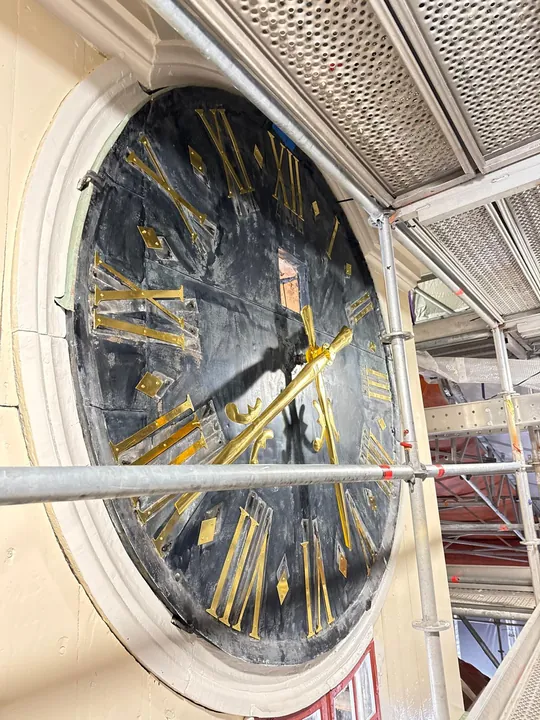
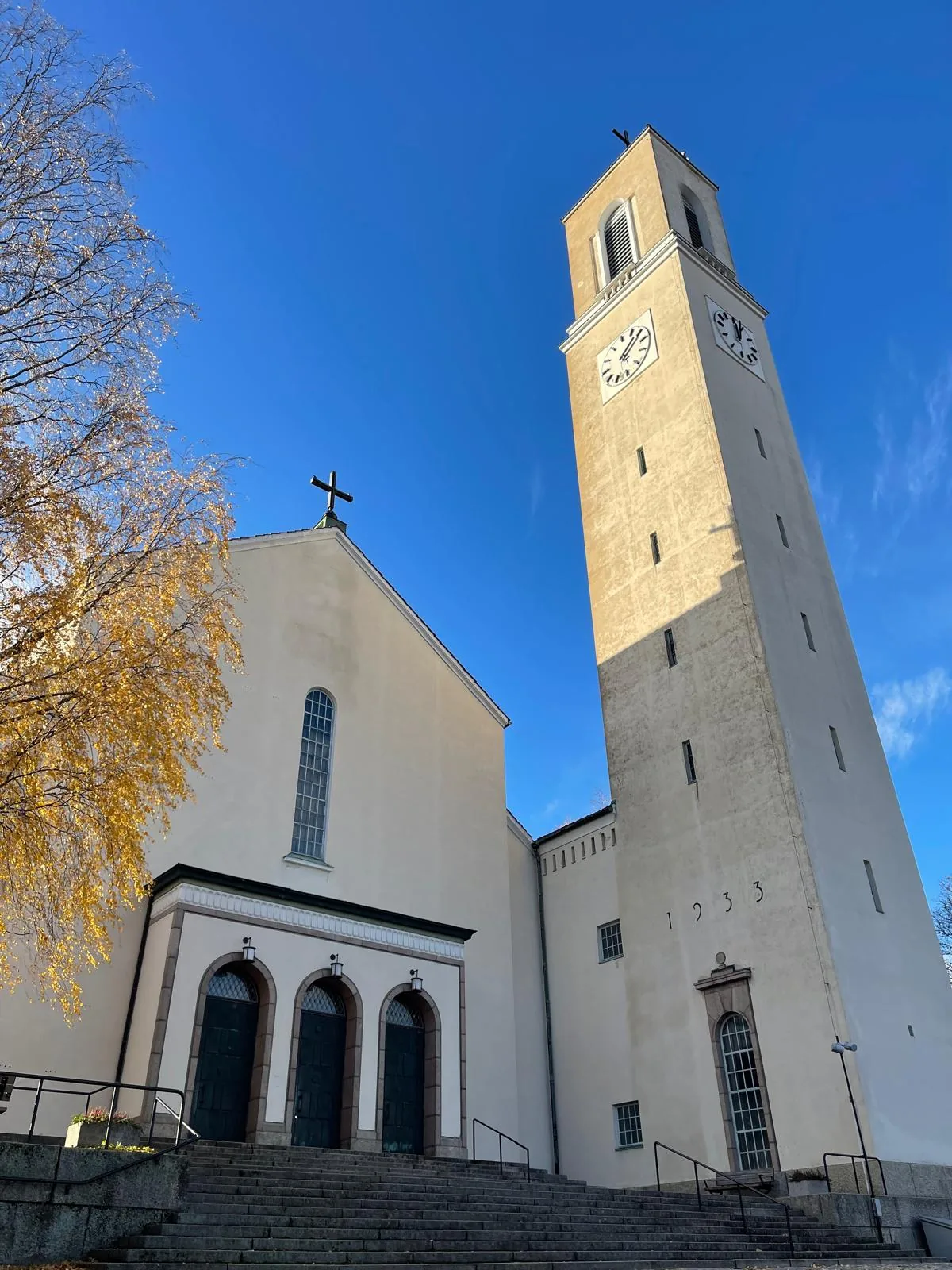
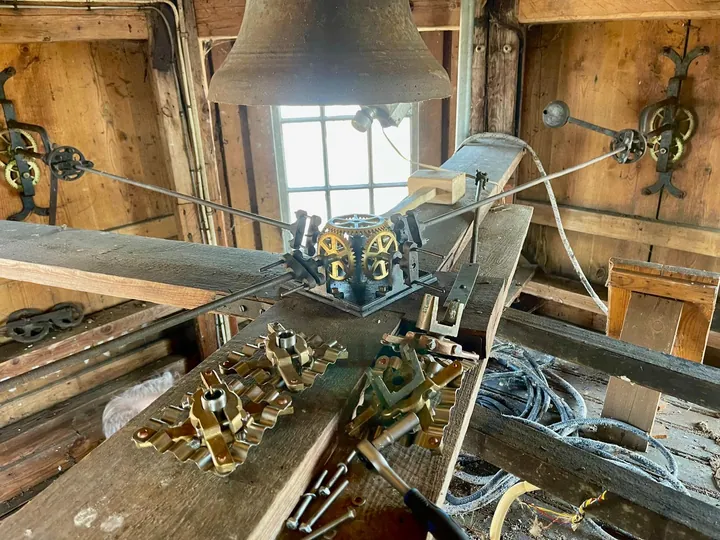
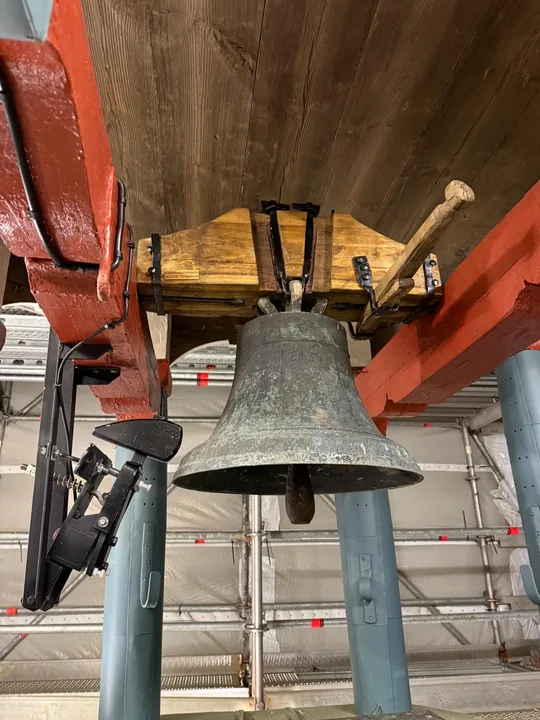
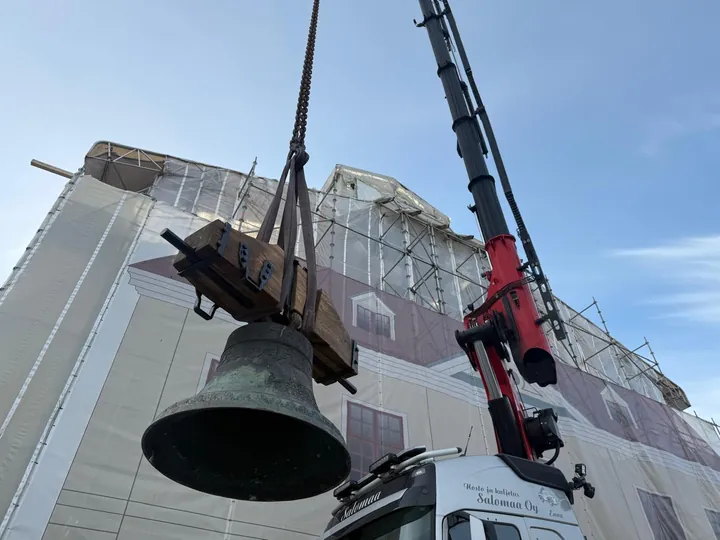
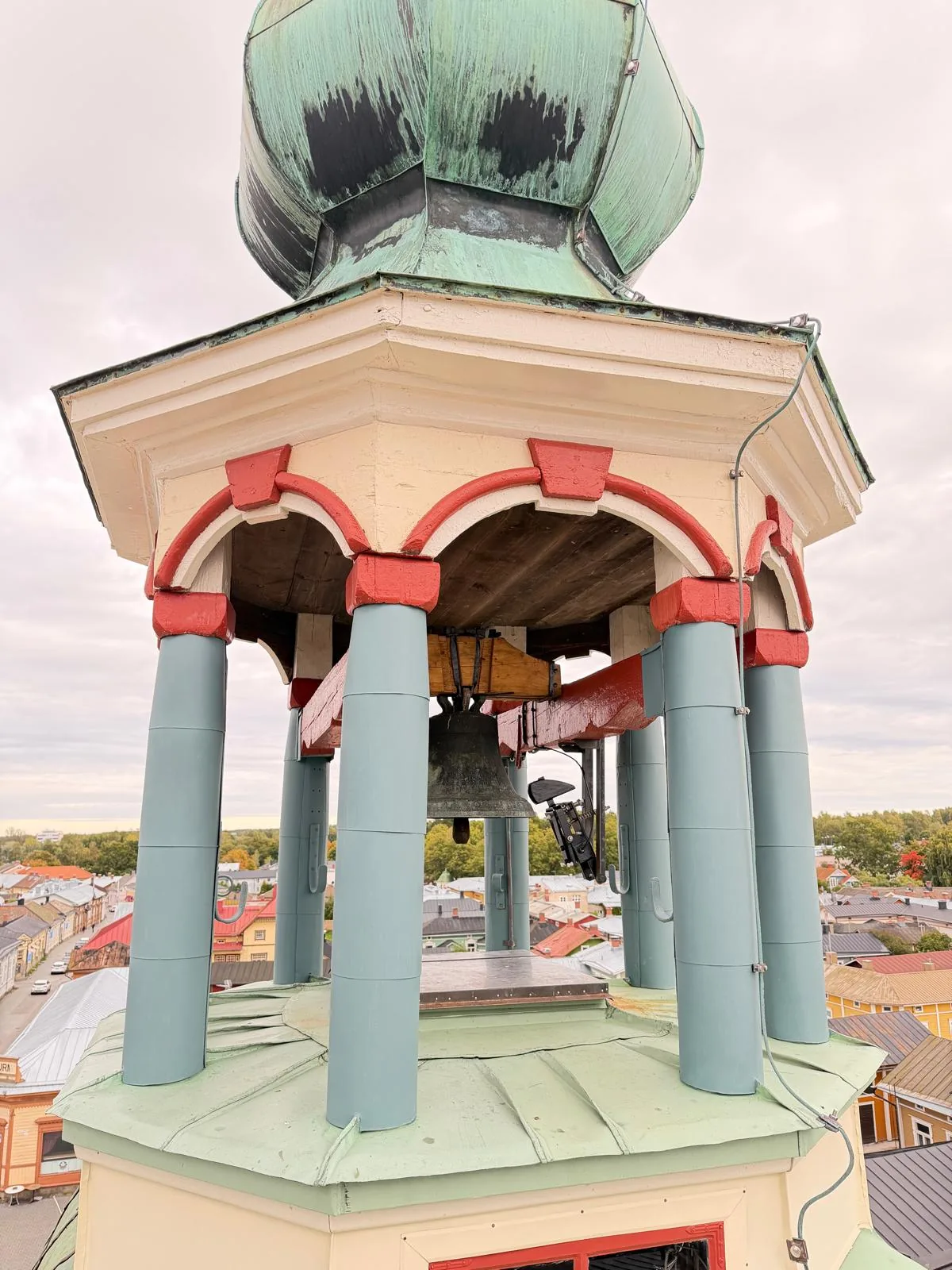
The first fully mechanical clocks were built in Europe in the late 13th century, and they were tower clocks. Their main task was to strike the hours on a bell – many early clocks had no dial at all. The English word clock itself derives from the medieval Latin clocca, meaning bell.
Early movements could be hours out in a day. The pendulum clock patented by Christiaan Huygens in 1657 improved accuracy decisively, and most tower clocks were converted to pendulums within a few decades. In the 19th century Edmund Beckett Denison developed the gravity escapement, which isolates the pendulum from the loads that wind and snow place on the hands. It is also used in the clock of Big Ben in London, which started in 1859.
From the late 19th century clocks were electrified. A master clock sent an electrical impulse at regular intervals, moving the slave clocks of a building or a whole town on by one step. Today even an old movement can be synchronised to a radio time signal, such as the DCF77 signal broadcast from Germany on 77.5 kilohertz, or to satellite time.
Well-known public clocks in Finland
Helsinki Central Station. The 48.5-metre clock tower of Eliel Saarinen's station was completed in 1919, but its German weight-driven clocks were only installed in 1922. Each side of the tower has its own dial and movement. The dials are three metres across and the minute hand is 150 centimetres long.
Turku Cathedral. Besides eight church bells, the tower has two time bells – a quarter bell and an hour bell – that strike the quarters and the full hours. The noon strikes have been broadcast by the Finnish Broadcasting Company since June 1944.
Almost every old town has a clock on its town hall, church or station whose dial and strike are part of the townscape. Many still run on their original movement – as long as it is cared for.

 EN
 Suomi
 Deutsch
 Svenska
 Eesti
 Polski
 Lietuvių
 Українська